From the shadowlands of Jansen
Heaven’s rescue plan
Heaven’s rescue plan
Imagine you are submerged in the Jordan River. You rise up and see a shining cloud overhead. What words might you expect to hear from the Heavenly Father about your true identity? Sadly, there are Christians unknowingly living in the shadowlands of Jansen that might expect to hear these harsh words from on high: “This is a sinner with whom I am displeased.”
Imagine you are submerged in the Jordan River. You rise up and see a shining cloud overhead. What words might you expect to hear from the Heavenly Father about your true identity? Sadly, there are Christians unknowingly living in the shadowlands of Jansen that might expect to hear these harsh words from on high: “This is a sinner with whom I am displeased.”
It is worth taking time to prayerfully reflect on how we fundamentally view ourselves and our identity in God. Do I fully accept my identity as a beloved “son or daughter in the Son,” adopted by the Heavenly Father through the sacrament of Baptism? If so, then despite my personal sins which I should always repent of, I am called to accept the words that Jesus heard at his baptism in the Jordan: “This is my beloved Son, with whom I am well pleased.” (Mt. 3:17) A few years ago while on vacation, I rejoiced to see a teenager wearing a sweatshirt that said “Child of God.” How moving it was to see a young person grasping her identity in the Lord.
Not only do we become sons and daughters in the Son through Baptism, we also become members of Christ’s bride, the Church. We are thus not only the beloved adopted children of the Father, we are also the beloved bride of Christ. Our destiny is highlighted in the Bible’s last book which portrays heaven as an eternal wedding feast and the Church as Christ’s spotless bride: “Let us rejoice and be glad and give him glory. For the wedding day of the Lamb has come, his bride has made herself ready. She was allowed to wear a bright, clean linen garment.” (Rev. 19:7-8) Beloved child of God; beloved bride of Christ! How blessed are we Christians, that this is our deepest, twofold identity.
Jansen’s Long Shadow
Who was Jansen? Cornelius Jansen was a 17th-century Dutch bishop who sparked a movement called Jansenism—later condemned as heretical by the Catholic Church. His ideas were influential in Europe, and vestiges of Jansenism can still be found today, even in the United States. Jansenism tends to be marked by a fear-based, white-knuckled, legalistic approach to the moral and spiritual life. Scrupulosity and rigorism are often fruits of Jansenism, seeing sin where there is no sin, and viewing human nature as not just fallen—but totally corrupt. For a Jansenist, our core identity is “sinner.” And regarding salvation, a cloud of pessimism predominates, claiming that only some predestined souls receive God’s grace to be saved; as for the rest, Jansenism believes that God withholds the graces necessary for salvation, meaning they are predestined to hell. The Jansenist God is therefore mostly a condemning figure to be feared.
Thankfully, in the last century, the Catholic Church has aimed to shake free of the last remnants of Jansenism by returning to the original vision of the moral and spiritual life found in the Gospels and the Fathers of the Church … a vision that centers on the very thing Jesus preached about: beatitude—authentic happiness in God! Significantly, Part Three of the Catechism of the Catholic Church is entitled, “Life in Christ,” emphasizing a spirit-led, happiness-based approach to the moral life rather than a legalistic, fear-based approach akin to Jansenism. While the Church still recognizes the reality of sin (both original and personal) and hell—the “state of definitive self-exclusion from communion with God and the blessed” (CCC 1033) – there is an overarching emphasis on our vocation to happiness in God and life in the spirit: “Life in the Holy Spirit fulfills the vocation of man.” (CCC 1699) The “law of the Spirit is meant to be primary for Christians, even though God’s commandments and written laws approved by the Church retain their importance. In other words, we are called to let the Holy Spirit lead us into living St. Irenaeus’ famous summation of the Christian life: “The glory of God is the human person fully alive!”
Heaven’s Two Answers to Jansenism
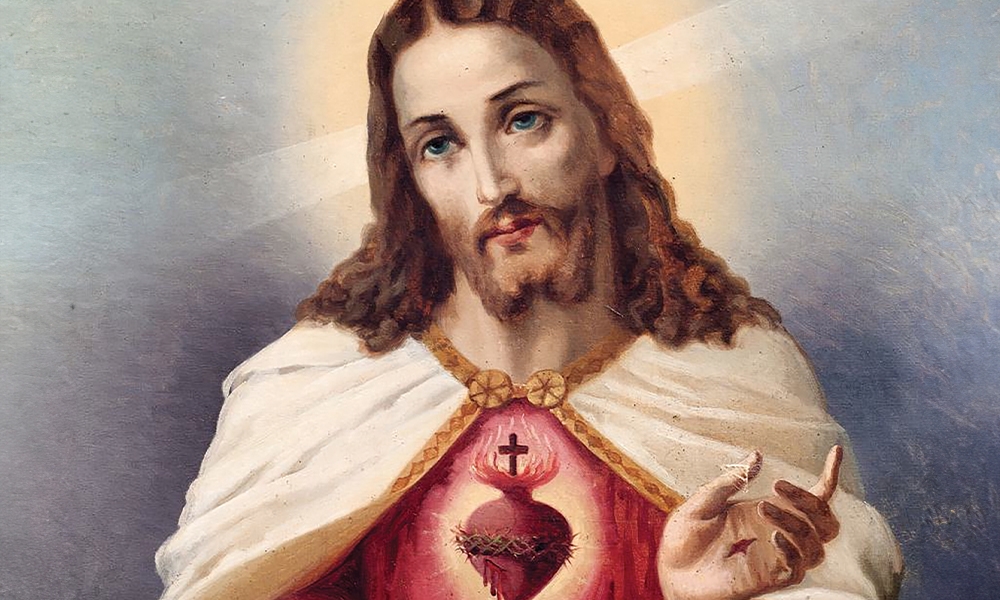
Jansenism was such a deviation from the Good News of a merciful Savior that Jesus himself intervened. Between 1673 and 1675, he appeared to St. Margaret Mary Alacoque in a series of visions at the Visitation Convent in Paray-le-Monial, France. (Jansenism had an especially strong influence on this country.) Jesus asked this Sister to spread devotion to his Sacred Heart—a symbol of his tender, merciful love. Beginning in 1674, he often appeared on the first Friday of the month, requesting devotion to his Sacred Heart especially on first Fridays. He also requested that the Feast of the Sacred Heart be included in the liturgical calendar, which was extended to the universal Church by Pope Pius IX in 1856. As if to add a further stamp of approval on devotion to the Sacred Heart, St. Margaret Mary Alaquoque’s body remains incorrupt, showing that the divine love symbolized by the Sacred Heart of the Resurrected Christ is indeed stronger than death.
Heaven’s second answer to Jansenism came in the last century. During the rise of Nazism in the 1930s, Jesus’ visitations to the Polish nun, St. Faustina, offered yet another antidote to Jansenism, emphasizing “the ocean of Divine Mercy” that flows from Jesus’ pierced Sacred Heart. How different from the pessimism of Jansenism is the short prayer that Jesus gave to Sister Faustina to share with the world: “Jesus, I trust in you.” The authentic spirit of the bride of Christ is always one of hope and trust in God’s merciful love—not a fearful spirit of doom and gloom.
The Sacred Heart and Independence Day
Devotion to the Sacred Heart is about to take center stage in the United States, and it is another opportunity to leave behind the shadowlands of Jansen. On June 11, the day before the Solemnity of the Sacred Heart, the U.S. Bishops will be consecrating the nation to the Sacred Heart of Jesus in anticipation of Independence Day, which this year commemorates the 250th anniversary of the signing of the Declaration of Independence whose last line actually professes dependence: “a firm reliance on the protection of divine Providence.” By their act of consecration, the U.S. Bishops will be emphasizing our total dependence on the mercy and love of the Lord symbolized by the Sacred Heart of Jesus, who assured St. Margaret Mary: “My Heart is so full of love for men that it can no longer contain the flames of its burning love.”
Dr. Dan Osborn is the Diocesan Theologian and Coordinator of Permanent Diaconate Formation & Ministry for the Diocese of Saginaw.