What do the Sacred Scriptures tell us about fasting?
What are you doing during Lent this year? This is a typical question asked of ourselves or of others. I would suspect that Lenten practices
for many are the same thing every year. We give this up or that. We take on this or that. We begin with the best intentions ... kind of like New Year’s resolutions. Will these things we choose to do lead us to conversion? The season of Lent, at its core, is about conversion.
What are you doing during Lent this year? This is a typical question asked of ourselves or of others. I would suspect that Lenten practices
for many are the same thing every year. We give this up or that. We take on this or that. We begin with the best intentions ... kind of like New Year’s resolutions. Will these things we choose to do lead us to conversion? The season of Lent, at its core, is about conversion.
Jesus gives us the Lenten activities of prayer, fasting and almsgiving. These activities cannot merely be external. They must be rooted in the heart, the inner sanctuary of our relationship with Christ. True conversion takes place in a heart-to-heart encounter, his desire for us meeting our desire for him.
Fasting is an important activity that can help facilitate this encounter, if properly understood. Fasting must be a partner with prayer to be effective, producing fruit that leads to holiness. Done properly, it converts our human desires to a greater desire for Jesus.
For many Catholics, it is often misinterpreted, and is not much part of their spiritual life, except during Lent. From recent research and anecdotal evidence, few Christians in America think fasting has a place in Christian life. We much prefer feasting! Yet from the earliest days of the church, fasting has been an important way to draw near to God, deepen one’s relationship with him and seek his help in times of need. Nearly all the great spiritual leaders of the church, as well as ordinary believers, known for their devotion to God have practiced fasting. Fasting is an important means of grace in the spiritual life.
What do the Scriptures say about fasting? In both the Old and New Testament, fasting is simply going without food in order to seek God for some special reason. Though the ways by which we seek God may vary, going without food is not usually one of them.
There is a tendency to expand the word “fasting” to include things other than food, such as television, internet, social media or other pleasures. Such abstaining is better described as “saying no” to some form of worldliness or harmful fleshly indulgence. It is a good thing to deny ourselves from different forms of worldliness. But in Scripture, the word fasting means going without food, the purpose of which is to earnestly seek God in prayer. People unacquainted with fasting may not see any compelling reason to do it. It is too hard; it would make me miserable; it doesn’t make sense, etc.
Through a biblical lens, fasting is God’s appointed way for us to cry out to him in situations of special need. Fasting should come out of a deep sense of our weakness and need to seek God in a more urgent, earnest and heartfelt manner for something of great importance to us or to his kingdom. It can be a way of breaking free from certain kinds of idolatry, expressing our desire for God more than anything else.
It also shows God that we are desperate for his help, seeking his attention by the extraordinary measure of forsaking our necessary
food so that our voice might be heard in heaven. When we come to God in this way, privately and from public warning, fully aware that we deserve nothing from him and can earn nothing by fasting, but that he is a gracious, generous and loving Father who cares about us, we can be sure that God does indeed hear (Mt 6:16–18).
The reasons that we might fast today are similar to those revealed in the Sacred Scriptures:
- to subdue the flesh, humbling ourselves before God, drawing near to him (Ps 69:10; 35:13)
- as part of a life of worship and devotion to God (Lk 2:37)
- to express sorrow and repentance for our sins, asking God’s help in breaking their power in our life, e.g., addictions, sinful habits, etc.
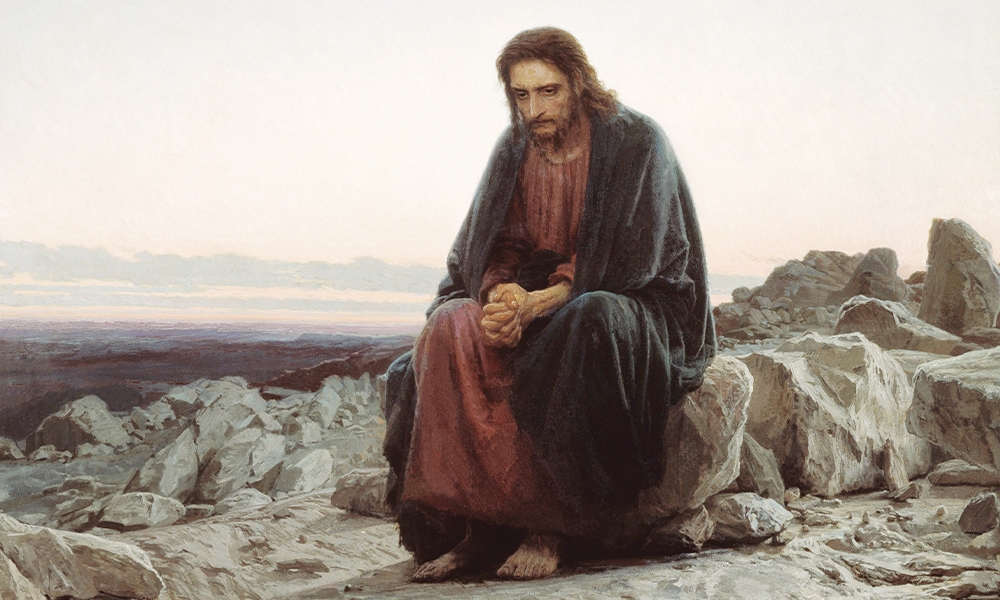
- for power to resist demonic temptation and attack (Mt 4:1–11)
- for the Holy Spirit’s vision, guidance and empowerment in ministry (Acts 13:1–4)
- to seek deliverance for the oppressed (Is 58:6)
- for the revival of God’s church (2 Chr 7:14)
- for protection of the nation in times of great difficulty or danger (2 Chr 20:1–4)
- for national repentance and mercy when God’s judgment of sin is at hand (Jon 3)
Fasting is not an activity we sign up for. It is a sanctuary we enter into. It is a place where we meet with God one on one. Fasting isn’t about impressing God or punishing ourselves—it’s about quieting every other voice in our lives so we can hear him, offering our hearts in surrender and creating space to walk more closely with the One who gave everything for us.
We have been created with an appetite for God. At times, this appetite must be awakened. Regular fasting invites us to turn from the dulling effects of food and the dangers of idolatry (everything we cling to that is not God) and to say, by taking on some simple fast: “O God, I want you.”
Our appetites dictate the direction of our lives — whether it be the cravings of our stomachs, the passionate desire for possessions or power or a deep longing for God. For the Christian, the hunger for anything besides God can be an archenemy or the rival. Hunger for God — and him alone — is the only thing that will bring victory.
In this Lenten season, rather than asking yourself, “What unhealthy dependency can I break by using fasting as a way to do it,” ask yourself and God, “What does God require of me?”
“If we don’t feel strong desires for the manifestation of the glory of God, it is not because you have drunk deeply and are satisfied. It isbecause we have nibbled so long at the table of the world. Our soul is stuffed with small things, and there is no room for the great.” [John Piper: A Hunger for God, Desiring God through Fasting and Prayer]
If we are full of what the world offers, then perhaps a fast might express, or even increase, our soul’s appetite for God. When God is the supreme hunger of our heart, he will be supreme in everything. When we are most satisfied in him, God will be most glorified in us. And we will not need or desire the things of this world.
Fasting can also be seen as a form of taking up our cross to follow Jesus. To take up a cross is not passively accepting the challenges of life, but rather a deliberate choice. Sickness, persecution and the antagonism of other people are not our real cross. We must purposely stoop down and pick up the cross for Jesus.
Fasting is one of the most biblical ways to do so, and as normal in a spiritual walk with God, as are prayer, Scripture, the sacraments, spiritual reading and any other thing we would do to grow in our spiritual life.
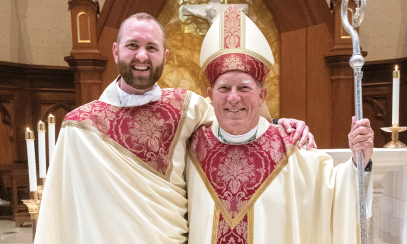
The Most Rev. Robert D. Gruss is the seventh bishop of the Catholic Diocese of Saginaw.